Sunday, June 26, 2022

What Are The 4 Pillars Of Content Marketing Success?


Content marketing success is 
choosing the right topic for the perfect audience on the best distribution channels.

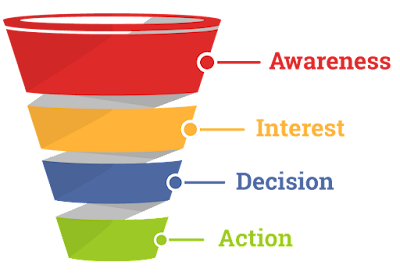
Remember that you’re publishing content that informs, that helps people do their jobs. If people are looking forward to your email blasts and blogs, you’re doing a great job. You should be thinking about where these people are in the sales funnel.

1. Understand your audience

Before you start creating your content, you need to understand your customer. Ask yourself who is your:

  • Current customer?
  • Potential customer?

Who would find your content useful?

Creating a customer or buyer persona is a valuable exercise. This is based on demographics and behaviors of the customers you have--and those you want to have.

Creating segmentation so you’re marketing differently to each unique group

Let’s look at a couple of customers in your database.

  • One is your desired customer—smart, tech-savvy Chloe who totally gets everything the first time and is eager to see a preview of the next software rollout. Chloe has purchased your software for her company and understands the software’s potential and loves the way it integrates with other applications. 
  • And then there’s Helen. Helen is a potential client who works for an IT manager. She’s in a strategic position as an influencer and could be making important recommendations, but prefers not to. Always expect Helen to call and ask for more instructions on how to use the new enhancement. You can send her a link to the excellent video tutorial that your tech team totally nailed, but you know it won’t be enough. Helen is always going to be very high maintenance. She may or may not ever become a client.

Just as Helen and Chloe are two separate segments in your database, they’re at different places on the sales funnel. Think about how you will market differently to them. You’ll want to include Chloe on new products/updates and invite her to your spring gala fundraiser. Helen will receive only the most general information. If you can’t get past Helen and build a relationship with someone else in her company, this relationship may not be worth more effort.

2. Map the content to the sales cycle

Could this example be any clearer? The scale and cost of the commitment drives the content

  • If a buyer is considering a one-time license fee for software that costs $50/year, you might detail the software’s benefits in two-three paragraphs and include a few customer testimonials. 
  • However. if a buyer is purchasing several hundred licenses for software that cost $100,000, this is getting into some serious money, and the content totally needs to step up. This calls for case studies, product sheets, a video and integration guides. 

Let’s break it down so you can see exactly what type of content to produce

  • Awareness phase of sales funnel. Content to increase your brand awareness by promoting your brand. Blog posts, white papers, webinars and infographics. These will still be at a pretty high level.
  • Evaluation phase of sales funnel. Content that will increase the marketing qualified leads (MQL). Buyer’s not ready to make a decision but understands that your brand is a leader in this field. Provide case studies, webinars, video and tech guides.
  • Purchase phase of sales funnel. Content that will turn a marketing qualified lead into a sales qualified lead (SQL). Getting closer to a decision, so the content should make it easy to choose your product over that of a competitor: Implementation guides, free trials, and live demonstrations.

3. Create the content @ 2 thousand words/article

You now understand the customer and know what type of content goes with each stage of the sales cycle. Now it’s time to create different types of content that decision-makers want to read before making an important decision. 65% of B2B buyers value research reports and studies compared to any other content type (followed by technical guides, insight, white papers, and articles). Despite user-content protest, longer content ranks higher than shorter content. Remember that Google needs words in order to go to work. The number of words you need to write to rank in the top ten? It’s 2,000 words.

To increase traffic and show that your content marketing efforts are adding value for your business, those cheesy little 400-word posts are simply not good enough. Longer content is also shared more on social networks. Content that’s 3 thousand words is shared 2-3 times more times than 1-thousand word articles.

I have an ongoing battle with my clients because they never want to include more than a few sentences per page on their websites. I argue that “you consider yourself an expert and you sum it up in two sentences?” They insist that no one will read it--and they may not. But if someone wants more information, it should be there for them. We can frontload the important information. What they don’t understand is that Google needs that content in order to go to work. It’s content that will help their websites show up in search.

To clarify, longer content will help you:

  • Rank better in Google
  • Get more social shares
  • Get more inbound links

4. Promote content

You have to remember that content marketing is part content, part marketing—you’ve got to step up and promote it.

The most fundamental way to promote your content is to publish it to your website

  • Create a blogpost and publish that blog to your blog, LinkedIn and other blog sites. 
  • I always post blogs to Google’s Blogger. It’s never a bad idea to be posting to a Google product. 
  • Once you’ve posted your blog, post an excerpt with an image to your social media sites—Facebook, LinkedIn, Instagram, TikTok, etc. 
  • Use that blog in your email marketing blast. I love blogs because they’re the workhorse of a content marketing program. Post part of your blog to your email, then link to the blog on your website with Read more. 
  • Google AdWords campaigns: If you’re promoting a new white paper or eBook, you can create display campaigns to raise the visibility.
  • Start using remarketing that will retarget abandoned visitors. 
  • Consider creating an ebook. Use this as intellectual property that users can download with their email address. 

5. Get to know and understand your data and make adjustments

Did the content perform well? Did the content perform as you expected? You need to measure how well your content performs and analyze its progress.

To measure the content marketing success metrics, ask yourself these questions:

  • How many page views does the content receive?
  • What type of content is shared the most?
  • What type of content is read the most?
  • What keywords do people search for to find my content?
  • How many leads did my content generate?

Remember that you’re generating data as you go along to help answer these questions. I use my own blog posts as content marketing case studies by analyzing the data of what topics/keywords work well.

Contact Top of Mind Marketing. We’re writers, digital media specialists.

Saturday, June 18, 2022

What If You Could Rank on Google Without Doing Ads?


What are online advertising platforms?

Online advertising has exploded. If you read any article about marketing these days, there’s just an assumption that you’re doing online ads. Google is raking in an estimated $100M/day from this business alone. Amazon’s right up there, helping Jeff Bezos finance his next trip to the great beyond. 

We advertise on Facebook and Linkedin, on Twitter and Instagram

Every business with an online platform is offering advertising opportunities. But online ads, (pay-per-click or PPC) are a bit of an art form. You can’t create an ad and expect it to just perform for you. You’ve got to test, monitor, make adjustments and swap it out to keep it fresh. Like a twelve-step program, it works if you work it. My experience is that many people launch their ad campaigns and assume that they’re going to be driving lots of new traffic to their websites and ultimately, new clients. Unfortunately, if you’re not committing to managing your PPC campaign, you’re likely wasting your marketing dollars.

It's hard to rank organically on Google 

It’s increasingly difficult to rank organically, which means it’s hard to show up on page one of a Google search without paying for ads. Take a look at a search results page and you’ll see that the results all say “Ad” next to them. Someone’s paying (a lot) to rank on the first or even second page of Google or other search engines. 

But what if you could rank high on Google without having to do PPC ads? 

I’ve been using some new software that’s based on creating content that matches the high-ranking search terms/keywords that people are keying into a Google search. For someone like me, for whom writing is easy, I can write a blog exactly matching those keyword phrases in my titles. These show up in my website’s information bar and Google recognizes these titles as part of its content indexing process. I use other highly ranked keyword phrases in my headlines and subheads and assign “H” tags to them, which Google also looks for.

This software, DemandJump, is giving me a blueprint—or think of these as breadcrumbs--for how to show up in search. The information is cumulative, of course, but I’ve been using this for a month or so, and I’m starting to see the results. I’m getting calls from people who saw me in a Google search. Happy. 

DemandJump’s content is based on a pillar strategy

DemandJump is based on creating a content hierarchy. At the top of every content pillar is a 3,000-word pillar page—this is an exhaustive overview of your business. Your individual landing pages roll up to your main pillar page. Blogs roll up to landing pages. It’s a hierarchy--layered, interconnected webs of content. Everything is connected, with links among pages and topics to keep the user engaged.

I love this application! Interested in DemandJump? Give Top of Mind Marketing a call and let’s talk about how this might work for your business. 


Wednesday, June 8, 2022

What Is Local SEO?


What Is Local SEO?

More important, why is it important? This is why: Nearly half of all searches--an estimated 46%, have a local intent. That means their users are seeking information that is location-specific. Local SEO is about optimizing for a search query that is location-specific. Google and other search engines, including Google’s YouTube, use a user’s location based on IP address (for desktop) and geolocation (for mobile) to determine what results to serve up to the user.

How many times have you keyed in a search query, then added “near me”?

That’s local SEO at work. Besides the convenience of identifying local doctors, dentists, barbers, drycleaners and other service professionals in our own little ‘hoods, we like to support our local businesses. It builds community.

Local Pack is another Google search tool

To help connect those users with their location results, Google has changed their algorithm to accommodate location in its search engine results page (SERP) listings. Another handy search tool is Google’s Local Pack--connecting users to specific local businesses they’re looking for.

You’ve used the Local Pack; you just didn’t know it had a name!

You’ve seen the Local Pack a gazillion times, but you likely didn’t know that it was its own product in the search space. Let’s say you’re going to be in Athens for a month and you’re looking for cafes with wifi near your airbnb. (Actually this was my local search for the month of May.) You’re served up a map with three listings, your location and that of three cafes. This is your Local Pack, and it’s very useful. If anyone’s wondering, I found a delightful little cafĂ© in my neighborhood that became my go-to home with yummy food and friendly people, thanks to Local Pack!

How do you optimize for local search?

  • First and foremost, claim your Google Business Profile (GBP). This has become nonnegotiable.
  • Update NAP citations on your website. Having a consistent NAP plays an important part in Google’s Local Pack results and building citations to your GBP. Do an audit to make sure that your business is correctly listed the same way in every place that it’s listed. The same sequence of name, address, phone number, etc. is important as well. If your business is listed on those mysterious directories that seem to pop up, you’ll need to log in to all of these and make sure they all have your current information. 
  • Add your business to local directories. 
  • Get reviews and add them to your website. Add the local city for the person who’s giving the review. 
  • Identify local search terms and create local content: Make sure your name and address are in your footer. Add a notation that you are, for instance: “Serving the East Bay cities of Walnut Creek, Lafayette, Danville and Alamo”. 

GBP Ranking Factors. While Google doesn’t share the exact ranking factors, you can work within these guidelines.

  • Relevance: Complete and detailed business information will help Google better understand your business and match your listing to relevant searches from customers. This is a good time to do keyword research and identify what keywords/ phrases you want to own.
  • Distance: How far each potential business is from the location terms used in a search. 
  • Prominence: How well-known a business is. Know that you’re going to be competing with big brands. Prominence is based on your overall Internet presence. More reviews and positive ratings will improve your overall local ranking.

Google’s Business Profile is becoming a workhorse

Let’s be honest. Navigating among Google apps has been challenging. I’ve struggled with my own accounts as well as those of my clients and I always wonder how long it’s going to take me to log in. What kinds of workarounds I’m going to have to try. Sometimes I can’t log in at all and give up in disgust. But maybe Google finally figured out what a mess they’d created.

So now we have the newly named GBP. In the old days, you could never see your own GBP—you could log in to the page, but just like you can never see your own Google ads, you never could see your GBP. Now you can click on a link and it’s clearly visible! I just logged in to my page, updated my services, added a few blogs and uploaded images. Anyone can log in from Google apps—Google Maps, etc. A couple of my clients left reviews for me. This is so easy! It’s unlike the old GBP that it’s nearly transformational. What’s astonishing is that it took them 15 years or more to get here.

A recent article suggested that one of the very best things you can do for SEO is to get reviews on your GBP. Start reaching out to current and former clients and colleagues and ask them to give you a review. Forget Yelp. It’s just too annoying.

Google’s really getting behind their new and improved GBP and making it seamless

Google’s making it easier for users to interact directly with businesses from their GBP pages to book appointments, get quotes for services and message directly. Without a GBP, you’re going to be missing out on opportunities in local search results and Local Packs. The Local Packs, especially, are just a nice visual way to package search results. You really want to be taking advantage of Google’s tools.

A Google Business Profile may be one of the most important free tools that any business has at its disposal. If you haven’t already, create a one. Believe me, I never would have said this before, because there were times when I was frustrated beyond belief. But it’s just so easy.

If you need help optimizing your website, we can help

Contact Top of Mind Marketing. We’re writers and content marketing specialists.


Sunday, May 29, 2022

Types of Content Marketing Examples


Below is a list of 
content marketing examples

While most do involve writing, for those who hate to write, there are other ways to communicate, including infographics, videos, podcasts and memes, which are graphical interpretations that we see a lot on social media.

1. Listicles. Nothing new here, but we love listicles because they’re so easy to scan and access. A quick glance and you know if you want to read more or move on.

2. Ebooks. Ebooks are long-form content, available as PDF downloads or in HTML format. A great format for sharing your knowledge and expertise on a given topic. Ebooks have a number of benefits, including lead generation, establishing authority, growing email lists, and beefing up your overall content offering. Host your ebook on your website. Ask for email addresses in exchange for downloading the ebook. An ebook should be low promo, high quality. Think authoritative and solutions-focused.

3. Infographics. Infographics have become very popular because people love the graphic format. I’ve seen so many infographics that try to present too much information that they really fail their missions. Infographics often are presenting statistics, research, and other data to make them more engaging, but the reality is that they try to present too much information and they’re difficult to interpret.

I just read that infographics are shared three times more often than other content types on social media, so they can also help you with your backlink building, as well as growing your audience. Try to think about clarity. Is the font visible against the background? Is it so small that it’s hard to read? In some cases, infographics might be better served by being broken down into two infographics. They’re trying to present too much information. Sit back and take an objective look.

4. How-to guides. Instructional content can explain how to do anything from achieving a task to building a cabin. This type of content shares expertise, builds trust, and grows email lists. This is another situation of trading access for a user’s email address.

5. Checklists. Who doesn’t love free tools? And that’s just what a checklist is all about. Follow this list and you’ll be solving a problem. And there’s the added reward of being able to check something off your list. Think about using an infographic to display your checklist.

6. Case studies. If someone goes to your website, they’re most likely to check out the About page (they’re interested in you) and case studies. This reaffirms my belief that good marketing tells a story. Case studies are an opportunity to showcase your expertise. Show how you helped a client save money, get new clients, grow their business, solve problems, etc. Case studies are much more effective than just describing your services. They’re showcasing your expertise.

7. Testimonials and reviews. These days, we don’t do or buy anything without first checking the reviews. Reviews have long been important, but the Covid lockdown was the genesis for a new wave of online shoppers. We all began looking for previous user experiences before making a purchase. From the restaurants we choose, the movies we watch to clothing, sports events we attend and vacations we take. This also has given rise to the influencermovement. We pay people who have a lot of reviews, likes, endorsements and followings.

8. Influencer marketing. Getting an endorsement from someone with a large online following. According to research, for each dollar you spend on influencer marketing, you generate up to $6.50 for your business. Creating content in partnership with influencers is a great way to make sure your leads convert. If long enough to build a story around, create a blogpost. Otherwise, these make great social media posts.

9. Blogs. Blogs can be short or long and are a great interactive way for customers to communicate with a new potential customer or faithful, loyal customers. They can be in the form of FAQs, and sometimes companies will use blogs to answer customer questions. If there’s a controversial matter, companies can write evergreen content that the audience needs to know about.

10. Long-form content. Long-form content is more than 1,000 words. This data often lives on blogs, articles, and white papers. Long-form content gives readers a more in-depth look at specific insights or goals a company has and has become increasingly important for search engine optimization (SEO).

Long-form content is also a way to share expertise. There’s such an emphasis these days on minimalism. No one wants content on their websites, “no one’s going to read it”. This makes me crazy. Not everyone’s going to read it, but some people who are really interested in your product may want to read it. Don’t insult them by providing a couple of sentences. Provide information that’s comprehensive enough to answer their questions. Frontload information with the most important information in the first paragraph to satisfy the “lite” consumers.

11. Videos. Videos continue to grow in popularity. People spend at least 100 minutes/day watching videos, and 48% of customers rely on videos to reflect their interests. Good video content is more likely to convert and nurture a lead than print.

12. Memes. Time to have a little fun—because that’s why people are on social media sites. Work a few memes into your content strategy--quick posts sharing knowledge on a specific topic in graphic form.

13. Social media posts. Keep posts short and focused on a single topic. Include an image. Decide which channels you can support. Don’t forget hash tags.

14. Podcasts. Keep in mind that the purpose of a podcast is entertainment. Podcast listeners tune in for news updates, current event breakdowns or to learn about a new topic or industry. I listen to a couple of podcasts from lawyers whose opinions I respect. They generally weigh in on some of the rulings that are coming down these days from the lower and supreme courts.

15. Blogs are easy to write and publish. But I’m a writer so of course it’s easy for me. If writing is a struggle for you, this is going to be a slog. The best way to create a regular blog is make a commitment and own it. Every week or every other week, block this out on your calendar. As per one of my pals, “if it hits my calendar, it gets done.” Be thinking about what to write about. An article you read, a webinar you were on, a seminar you attended, industry updates, new products and upgrades. It’s endless.

Remember that people are on social media to have fun so blogs can be funny and irreverent. Shoot for high quality, topical, and relevant. Blogs are easy to share and be shared by search engines, so there’s high value associated with blogs.

16. Blog every few days: Are you kidding me? Blogging best practices calls for posting every few days. Who can write a high-quality blog that often? If you’ve got a team to share blogging responsibilities, perhaps you can meet this kind of timeline. The reality? This is always going to be the lowest priority and other stuff inevitably surfaces. Shoot for once/week. Twice/month is manageable.

  • Post your blog every few days. 
  • Include a call to action. 
  • Develop an internal linking strategy among blogs and landing pages wherever there is synergy.
  • Do keyword research. I use Google’s keyword planner. Work in these words so they’re easy and natural. Use them in your subheads and headings. Do use H1-H3 tags for your headings

These content marketing examples provide a lot of flexibility when developing a content marketing strategy.

Use those formats that fit your skillset and are most appropriate for your business. Contact Top of Mind Marketing to help develop a successful marketing strategy. We’re writers and content marketing specialists.

Saturday, May 7, 2022

5 Reasons Why Digital Marketing Is Important


Digital marketing has become a key component of today’s marketing strategies, and it’s a significant departure from traditional marketing efforts. It creates strategic plans and attracts new customers by driving brand conversation on numerous digital channels. These digital channels can range from email to a wide range of mobile applications.

Digital marketing has become popular because of these key advantages:

  1. It’s measurable 
  2. Digital marketing is affordable—even with pay-per-click advertising, we can control the spend.
  3. The speed to customer market is immediate. 
  4. Engagement by your targeted customers may also be nearly immediate.

The internet has opened up new opportunities for businesses by being able to promote our products and services 24/7. Digital marketing provides a sometimes stunning array of demographic data on our customers. We know where they live, what their preferences are, their levels of education and job titles. Armed with this knowledge, we can better serve up products that they will want.

1. Higher conversion rates with digital marketing

The businesses that are using digital marketing can measure the conversion rates with real-time data. This helps to identify the percentage of customers who get converted into leads and then subscribers, and who finally purchases the product or service. Digital marketing helps qualify customers, and the end result is better lead conversion. SEO, social media marketing and email marketing are methods that provide fast and effective communication channels with high conversion rates.

2.Increase of trust in brands

Communicating with a brand’s social media pages for more direction or recommendations has become the norm. These interactions build trust and build up a strong image of the brand in the minds of new customers and leads to more conversions. A positive review by a satisfied customer increases the likelihood that other consumers will also convert and leave positive reviews. We all count on these reviews before making purchases—another great example of the influence of digital marketing.

3.Helps to create growth options for businesses

Digital marketing methodologies are customizable and are much cheaper than the old forms of marketing. With digital marketing, we can select the tool that meets our budget and still reach a large, prequalified audience at a low cost to grow market share.

4.Cost-effective marketing for any business

Digital marketing provides the ability to reach more qualified customers and stay within your budget. You identify your marketing budget.

5.Targeting and getting connected to the mobile customers

Mobile phones have become a necessary business tool, and as a consequence, our websites are designed to configure to our mobile devices. We’re now using our mobile phones to attract and build relationships. We’re now using text applications, developing campaigns that reach our customers on a whole new level.

Getting started with digital marketing

Digital marketing strategies are affordable, measurable, accessible and endlessly adaptable. Getting started on social channels or doing online advertising can be intimidating, and there is always a learning curve. We help our clients take the guesswork out of digital marketing and develop customized campaigns that help them grow their businesses. Contact Top of Mind Marketing to help grow your business.


Tuesday, April 12, 2022

A Good Time to Be Writing Grants and Winning Awards

I work with several nonprofits, and I’ve been busy writing grants. Happily, these grants also have been winning awards. It’s not that I’m so brilliant, it’s more a matter of identifying a project and meeting the requirements for the application process. Peeling back the layers on the grant-writing process opens up a whole new world of money that’s waiting to be claimed. There are government grants, state grants and foundation grants. There are private-enterprise grants and those for small businesses. Grants all require a project, and they may favor specific groups, such as underserved or native American communities.

NONPROFITS MAY NOT BE TAKING ADVANTAGE OF POTENTIAL GRANT FUNDS

Finding grants that are a fit for your organization can be extremely time consuming. Once you log into the federal and state grant databases, you can filter information by a number of criteria, including the funding agency, keywords, etc. Some of these databases are free; for others, there’s a subscription fee.  

THIS IS A GOOD TIME TO BE LOOKING FOR GRANT MONEY

Our county’s 250th anniversary is in 2026, but the National Endowment for the Humanities is jumpstarting the celebration with its “A More Perfect Union” initiative, encouraging projects that explore and tell the stories of our quest for a more just, inclusive, and sustainable society. There is a long list of grants that supports this initiative. In true “teach a man to fish and he can feed himself for life” style, these grants tend to be pragmatic in approach. If you need to restore old manuscripts for your museum, for example, you won’t be able to apply for money for their restoration. You can, however, apply for money to hire scholars/consultants who will teach you and your team how to restore these old documents themselves.

Grants tend to favor projects where there is a clear beginning and an end. Or those that develop new community relationships or reach new demographics. They tend to love projects that target youth or minorities. 

THE MORE MONEY INVOLVED, THE MORE COMPLEX THE SUBMITTAL PROCESS

Not surprisingly, if the size of the award is bigger, the application process gets a lot more complicated. There are video overview sessions and preliminary document submittals to make sure you’re on the right track. It’s necessary to get your team involved in this process. 

KEY TO WINNING GRANT AWARDS IS FOLLOWING THE GRANT REQUIREMENTS

Grant development often includes strict formatting rules. Sometimes the grant is completely online so that word or character counts can be controlled. This can be challenging when you’re coordinating information with a team. 


BUILDING A BUSINESS CASE FOR YOUR PROJECT TO RECEIVE FUNDING

Most of all, it’s important to remember that grant writing comes down to sales. You’re building a business case for why you should be awarded money. It’s up to you to tell a convincing story about how your organization will use that money to reengineer processes or enhance your organization. 

If you’re wondering about grant opportunities for your organization, let’s schedule a call to talk. Top of Mind Marketing, writers and content marketers.

Sunday, March 6, 2022

Google Biz Page Gets an Upgrade to Business Profile


KEEP YOUR GBP UPDATED

Like your website, if you want your GBP to work for you, you need to optimize it and update it with current information. The best way to do this is to add your blogs to your GBP. Post excerpts of your blogs, then include important backlinks back to your website where users can read more.

According to Ipsos Research, an up-to-date Google Business Profile:

  • Is 2.7x more likely to be considered more reputable.
  • Gets 7x more clicks.
  • Is 70% more likely to attract location visits.
  • Is 50% more likely to lead to a purchase.

For one client I’ve been writing an article and posting it to their website for eight years

I’ve also been posting these articles to their GBP. Google sends me a monthly report with performance metrics. If you want more detailed information, you can go into your dashboard and manipulate date ranges and other information to get more details.

YOU’LL SEE METRICS FOR THE NUMBER OF:

  • Users who viewed your profile.
  • Unique customers who requested directions to your business. 
  • Clicks on the call button on your Business Profile. 
  • Clicks on the website link.
  • Unique conversations through messages.


I’m also interested in the stats on the blogs I post to my GBP. I get a surprising number of views and clickthroughs—sometimes more than 200 views. This is a good example of evergreen content that transcends news cycles and remains relevant.

WHEN YOU HAVE A GBP, YOU’RE PLAYING IN GOOGLE’S PLAYGROUND

GBP is a community profile—it’s not just yours. You’re joining a community. Virtually anyone online can contribute to your Google Business Profile. Google encourages user-generated content, like reviews, Q&As, updates, photos, videos, etc.

  • Keeping your hours current. Obvious, right? What about holiday hours—especially the ones that sneak up on you—MLK Day, Cesar Chavez, or the new Juneteenth on the 19th of June this year. 
  • What is your Covid policy this week? After two long years, it’s still a moving target. 
  • If you sell products at your store or business, add them to your GBP.
  • Upload images. If you have product/sale images, upload and keep these fresh. Businesses with photos get 42% more requests for directions. 
  • If you’re a service company and don’t have pictures of your products, think about photos of your team. This humanizes you and makes you accessible. 

WHY USE GOOGLE BUSINESS PROFILES FOR LOCAL SEO?

It’s a bit of a paradox. We’re learned to do just about everything virtually, yet we love to support our local businesses. If we’re searching for a service provider, we invariably choose the one that’s closest.

Expect to see more robust GBP enhancements in the coming months. If you don’t have a GBP, create one. If you have one, keep it updated! If this is just way too confusing, call me and I’ll help you! Using Google business applications takes stamina. Navigating among Google apps can be frightening.